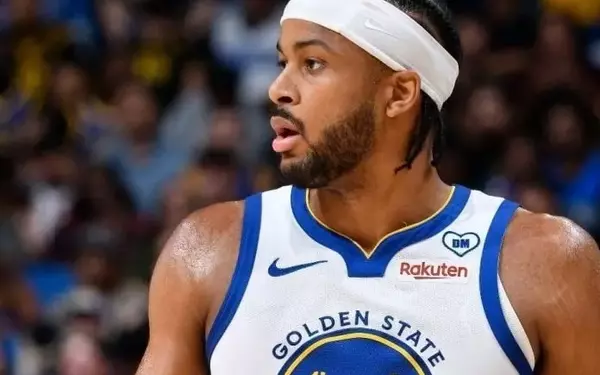
The Golden State Warriors are actively engaged in exploring potential sign-and-trade scenarios involving their restricted free agent, Jonathan Kuminga. However, these efforts have been met with significant obstacles, primarily stemming from intricate salary cap limitations and a specific provision within the Collective Bargaining Agreement known as 'base-year compensation.' This rule complicates the team's ability to effectively balance incoming and outgoing salaries in a trade, thereby hindering negotiations with interested parties. Despite these complexities, internal indications suggest that Kuminga's eventual re-signing with the Warriors is the most probable resolution, as viable trade avenues have yet to materialize.
A critical element in the ongoing discussions is the 'base-year compensation' rule. This provision significantly impacts how Kuminga's salary is accounted for in trade calculations, making it difficult for the Warriors to find suitable trade partners who can accommodate his contract under the current rules. This unique aspect of the CBA effectively reduces the team's flexibility in structuring potential deals, leading to a standstill in trade talks.
Kuminga, a 22-year-old forward, currently remains unsigned. He has a qualifying offer of $7.9 million from the Warriors, which he has the option to accept at any point before October 1. Should he choose to accept this offer, he would play the upcoming season under a one-year agreement, which notably includes a no-trade clause. This clause would provide Kuminga with considerable leverage and control over any potential mid-season movement, offering him a degree of autonomy over his immediate future.
Assessing Kuminga's market value has proven to be a complex task for league executives. One anonymous executive reportedly characterized the disparity between Kuminga's contract and his perceived trade value as the most 'misaligned' among the current pool of restricted free agents. Despite this, various short-term contract proposals have been discussed, including a potential two-year, $45 million agreement or a three-year, $53.5 million deal that could feature a player option. These proposed figures aim to provide the Warriors with additional tradable salary assets without imposing long-term financial burdens.
Kuminga's profile as a versatile wing player, combined with his youth and athletic prowess, makes him an appealing asset across the league. Last season, he demonstrated notable improvements, averaging 15.3 points and 4.6 rebounds, with his efficiency increasing significantly during extended playing time after the All-Star break. Head coach Steve Kerr reportedly views Kuminga as an integral part of the team's strategy for the upcoming year, particularly as the Warriors plan to manage the playing minutes of their seasoned veterans. As the October 1 deadline draws nearer and with no substantial sign-and-trade options emerging, the focus intensifies on Kuminga's decision: whether to accept the qualifying offer or to reach a more extended short-term agreement with the team.
Ultimately, the Golden State Warriors find themselves navigating a challenging landscape in their pursuit of a resolution for Jonathan Kuminga's contract situation. The complexities of the Collective Bargaining Agreement and the unique valuation of Kuminga's skill set in the current market have made a sign-and-trade a difficult proposition. As the deadline approaches, the most likely path forward appears to be a short-term agreement or the acceptance of the qualifying offer, ensuring Kuminga remains a part of the Warriors' roster for the foreseeable future, a valuable asset for the team's strategic plans.