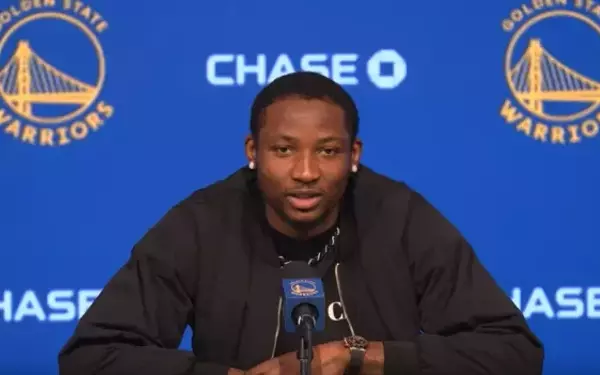
The Golden State Warriors have decided to discontinue all trade discussions concerning their restricted free agent, Jonathan Kuminga. This decision was revealed through reports by Shams Charania and Anthony Slater on ESPN’s NBA Today, highlighting a firm stance from the Warriors’ front office regarding the young forward’s future.
Despite significant interest from other teams and Kuminga’s desire for a no-trade clause, the Warriors are holding their ground. The 22-year-old player had previously turned down a two-year, $45 million contract, which included a team option for the second year. Kuminga’s preference is to control his future, either with the Warriors or with another team. He is reportedly contemplating accepting a one-year qualifying offer of $7.9 million, which would grant him a no-trade clause and allow him to become an unrestricted free agent in 2026. The Warriors have rejected all sign-and-trade proposals that do not meet their high valuation, with teams like the Sacramento Kings and Phoenix Suns failing to provide satisfactory offers. These offers, which included multi-year deals and guaranteed roles, still fell short of Golden State’s demand for either an unprotected first-round draft pick or a combination of financial flexibility and promising assets.
This prolonged negotiation impasse introduces an element of uncertainty for the upcoming season. While the Warriors believe they hold the upper hand in restricted free agency and are confident Kuminga will eventually agree to one of their terms, the ongoing situation could impact team cohesion and morale. With key players like Stephen Curry, Jimmy Butler, and Draymond Green aiming for another successful playoff run, resolving Kuminga’s contract status is crucial. The team's internal perspective is that even the $45 million offer provides flexibility, allowing them to potentially trade him later if the relationship deteriorates further, underscoring their strategic approach to player management and team building.
In the high-stakes world of professional sports, navigating complex contract negotiations requires patience, clear vision, and unwavering determination. This situation exemplifies how a team's commitment to its long-term strategy, combined with a player's pursuit of autonomy, can lead to challenging but ultimately character-building standoffs. It reminds us that integrity and steadfastness in one's objectives are vital for achieving positive outcomes, both on and off the court.