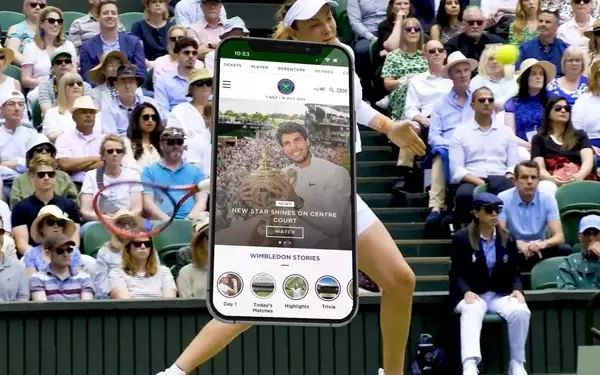
The recent integration of artificial intelligence into Wimbledon's officiating process has ignited considerable debate among professional tennis players. For the first time, the esteemed tournament has opted for an electronic line calling (ELC) system, moving away from traditional human line judges who determine whether a ball is in or out. This technological shift has, however, been met with skepticism and criticism from several athletes, who express concerns over the system's accuracy and its impact on the game's flow.
Multiple incidents have drawn attention to the new AI system's perceived shortcomings. British tennis sensation Emma Raducanu, for instance, vocally questioned a call where the ELC failed to register an out ball, compelling her to continue a point under false pretenses. Similarly, Jack Draper, the top-ranked British male player, voiced his reservations, stating that the AI technology did not seem \"100 percent accurate.\" Beyond questionable calls, players encountered other issues, such as Ben Shelton having to rush his match due to the AI system's impending shutdown because of dimming sunlight. Furthermore, concerns were raised about the automated speaker system, with one deaf player highlighting the disadvantage posed by the absence of human hand signals previously provided by line judges. A notable glitch occurred during a match between Sonay Kartal and Anastasia Pavlyuchenkova, where the AI system failed to make a call on an out ball, necessitating a replay of the point—an error Wimbledon attributed to human oversight in operating the technology. Despite these challenges, Debbie Jevans, chair of the All England Club, defended the transition, pointing out that in the past, the tournament faced consistent pressure to adopt electronic line calling due to its perceived higher accuracy compared to traditional methods used elsewhere in the sport.
These events at Wimbledon underscore a broader discussion regarding the optimal balance between human involvement and artificial intelligence in various sectors, not just sports. While AI offers potential for enhanced precision and efficiency, the experiences of these tennis players suggest that complete automation might overlook critical nuances and human elements essential for fair play and athlete well-being. The ongoing dialogue reinforces the idea that technology, particularly AI, functions best when complementing human capabilities, rather than entirely supplanting them. Embracing this collaborative approach can pave the way for innovations that truly serve to elevate and refine our world.