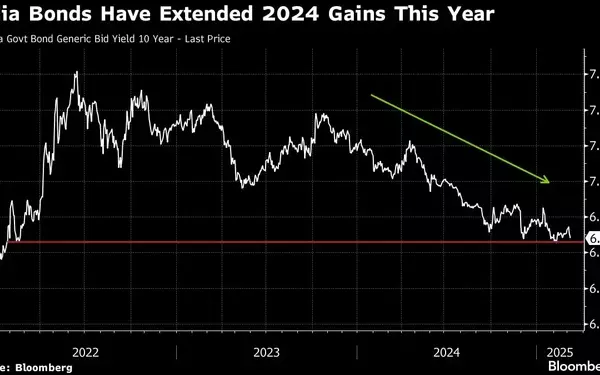
In a significant financial development, Chinese government bond yields have surged to their highest levels of the year. Investors are trimming holdings due to expectations that increased fiscal spending will stimulate economic growth and delay interest rate cuts. This shift has also seen liquidity moving towards riskier assets, particularly in the offshore stock market. The 10-year government bond yield climbed over 10 basis points on Monday, reaching 1.865%, marking a rise from January's record lows. Analysts attribute this trend to a stronger pro-growth stance by the government, including plans for substantial fiscal easing and ambitious growth targets.
Detailed Report: Chinese Bond Market Dynamics
In the heart of Beijing, during the vibrant autumn season, China's financial markets witnessed a notable shift as sovereign bond prices fell, pushing yields to their highest levels of the year. On Monday, the 10-year government bond yield rose over 10 basis points, hitting 1.865%. This increase reflects growing optimism about China's economic prospects following the announcement of an ambitious growth target of around 5% and a significant fiscal stimulus package.
The National People’s Congress signaled a robust pro-growth stance, centered on fiscal easing. Beijing announced a rare increase in its fiscal budget deficit to 4% of GDP, the highest since at least 2010, along with plans to issue ultra-long-term special treasury bonds worth 1.3 trillion yuan in 2025. This additional supply of bonds typically makes existing bonds less attractive, leading to lower prices and higher yields. By midday in Beijing, some of these gains had slightly moderated.
Investors have adjusted their expectations for near-term interest rate cuts as the People’s Bank of China (PBOC) prioritizes stabilizing the yuan amidst rising trade tensions with the U.S. Central bank Governor Pan Gongsheng reiterated the PBOC's commitment to maintaining currency stability at a reasonable level. The offshore yuan lost around 0.24% on Monday, trading at 7.2588 against the U.S. dollar. Rising Chinese bond yields provide a counterweight against depreciation pressure on the Renminbi, especially as U.S. yields have fallen significantly since January.
Simultaneously, there has been a notable pivot in investor sentiment towards riskier assets. The emergence of artificial intelligence startup DeepSeek has prompted global investors to allocate more capital to Chinese stocks. The MSCI China index has surged nearly 20% this year, while the Hong Kong-listed Hang Seng Index has soared over 18% year-to-date. This re-rating in offshore equities has led to a shift in favor of equities over government bonds.
Looking ahead, analysts suggest that the bond sell-off might run out of steam if the central bank prioritizes growth over exchange rate management, keeping monetary policy tilted towards easing.
From a reader's perspective, this financial shift underscores the complex interplay between fiscal policy, market sentiment, and global economic conditions. It highlights the importance of balancing growth objectives with currency stability, especially in the context of international trade dynamics. The recent developments signal a period of cautious optimism, where the Chinese economy aims to navigate through challenges while leveraging new opportunities in technology and fiscal reforms.