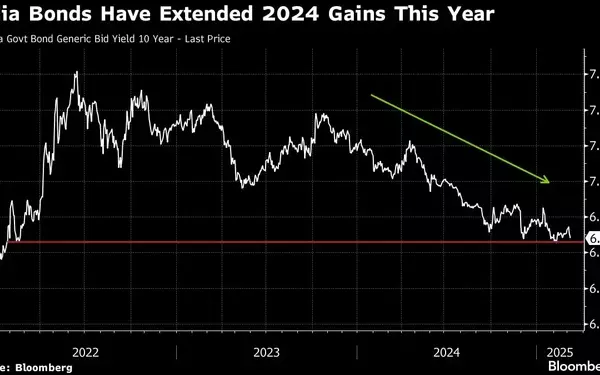
During his recent visit to Mumbai, Howard Marks, Co-chairman of Oaktree Capital Management, highlighted the growing appeal of fixed-income investments in today's financial landscape. According to Marks, high-yield bonds now offer competitive returns of around 7%, while private credit can yield between 9% and 11%. This shift marks a significant change from the low-rate environment that persisted between 2009 and 2021, which made credit investments less attractive. With interest rates on the rise, investors are reconsidering their portfolio allocations, particularly as equity markets face challenges in delivering historical returns. Marks also pointed out that the current Federal funds rate, though lower than its long-term average, is moving in a direction that enhances the attractiveness of fixed-income assets.
Marks emphasized that the prolonged period of low interest rates had dampened the allure of credit investments for over a decade. However, with the recent increase in rates, these investments have become more appealing. He noted that while the Federal funds rate currently stands at 4.5%, it has historically averaged around 4.9% over the past seven decades. This upward trend in rates has significantly boosted the returns available in fixed-income sectors. High-yield bonds, for instance, are now yielding approximately 7%, aligning with other investment strategies that offer similar returns. Private credit, on the other hand, presents even higher yields, ranging from 9% to 11%. These figures underscore the competitiveness of fixed-income options compared to equities, especially when considering the potential limitations in stock market performance.
The expert further discussed the outlook for equity markets, referencing projections from Goldman Sachs and JP Morgan. Goldman Sachs anticipates that the S&P 500 will deliver annual returns of just 3% over the next ten years. Meanwhile, data from JP Morgan suggests that when the S&P 500 is purchased at a price-to-earnings (P/E) ratio comparable to today's levels—around 22 or higher—historical returns over the following decade have typically ranged between 2% and -2% annually. Marks questioned whether the current high valuations of certain stocks, particularly those referred to as the "Magnificent 7," signal a new era or if they are unsustainable. This uncertainty adds another layer of complexity to investment decisions, particularly for those weighing the benefits of equities against fixed-income opportunities.
Marks concluded by advising investors to reassess their portfolios in light of the changing rate environment. Given the potentially lower returns expected from equities in the coming years, he suggested that fixed-income investments could provide a dependable alternative. The competitive and reliable returns offered by credit markets may encourage investors to strike a balance between equities and high-yield fixed-income assets. As the financial landscape continues to evolve, Marks' insights highlight the importance of adapting investment strategies to capitalize on emerging opportunities in the fixed-income sector.