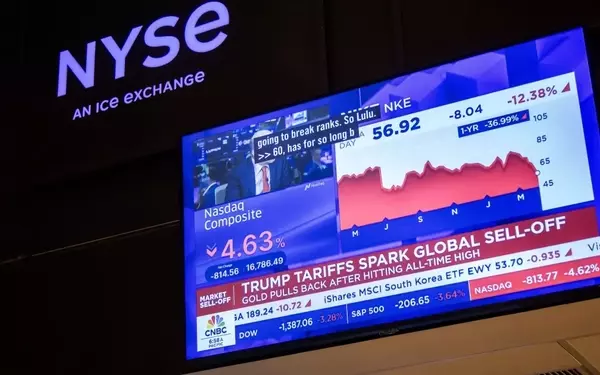
In a climate of escalating trade tensions, the U.S. bond market has witnessed a significant widening of credit spreads due to fears that President Trump's tariffs might trigger an economic downturn. Investment-grade bonds have hit their lowest levels in two years, while high-yield bonds are at their widest spread since November 2023. This volatility has led to a halt in new bond issuances as companies remain reluctant to pay higher premiums amidst uncertainty.
Market Uncertainty Grips Bond Issuers
For the third consecutive day, no new offerings were announced in either the investment-grade or high-yield sectors of the U.S. bond market. This reluctance stems from growing concerns about potential repercussions from recent tariff policies imposed by the U.S. government. According to ICE BAML data, investment-grade spreads widened significantly to 114 basis points by the end of last week, representing an increase of 18 basis points since the tariffs were introduced. Similarly, high-yield spreads expanded by 103 basis points to reach 445 basis points, marking their highest level since late 2023.
Amidst this turbulence, fixed-income strategist Guy LeBas of Janney Capital Management anticipates some buying interest if equity markets show signs of recovery. However, he cautions that current market conditions lack fundamental stability. Meanwhile, Daniel Krieter, a credit strategist at BMO, notes that further developments in trade negotiations could influence whether spreads tighten or continue to widen.
This pause in issuance follows a challenging period earlier this month when corporations found it difficult to issue bonds at desired prices. Several companies initially considered moving forward with bond sales but ultimately decided against it due to unpredictable market conditions and insufficient demand without exorbitant premiums.
An unnamed syndicate banker expressed that resolving these uncertainties hinges on clearer signals from policymakers or trading partners indicating a willingness to negotiate more constructively.
Perspective: A Wake-Up Call for Investors
From a journalist’s perspective, this situation serves as a stark reminder of how geopolitical decisions can ripple through financial markets, affecting everything from corporate borrowing costs to investor confidence. It underscores the importance of diversification and risk management in portfolio strategies. For readers, understanding these dynamics can help in making informed decisions during periods of heightened market volatility. As negotiations unfold, investors will be closely watching for any indications that suggest a return to more stable economic conditions.