In recent days, financial markets have witnessed significant fluctuations, primarily driven by shifts in investor sentiment regarding the U.S. dollar's dominance as a global reserve currency. The benchmark 10-year Treasury yield surged to 4.5%, marking a substantial increase from the previous week's rate of 3.99%. Concurrently, the ICE U.S. Dollar Index plummeted to its lowest point in three years. Experts attribute these movements to re-evaluations of the dollar's structural attractiveness amid changing global trade policies. Concerns about the long-term financial stability of the U.S., fueled by volatile stock market performance and declining asset values, have further intensified this trend.
Amidst these developments, strategists like George Saravelos from Deutsche Bank emphasize that the market is undergoing rapid de-dollarization. This phenomenon reflects a broader rotation away from U.S. assets, with evidence suggesting that this exodus began well before recent political events. As bond yields remain elevated and the dollar continues to weaken, analysts warn of potential repercussions for American companies reliant on foreign sales and the federal government's fiscal flexibility. Rising inflation concerns add another layer of complexity, constraining the Federal Reserve's policy options and altering dynamics within the bond market.
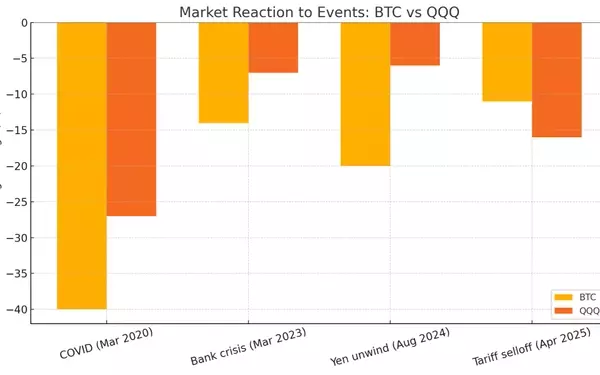
The April sell-off has been notably more pronounced and volatile compared to typical market corrections. Since President Donald Trump's tariff announcement, the S&P 500 has dropped by 5.4%, drawing parallels to infamous financial crises such as those in 2008 and 1987. These dramatic swings not only affect equities but also ripple through currency and bond markets. Traditionally, Treasurys and the dollar benefit during periods of uncertainty due to the U.S.'s historical financial strength. However, recent trends indicate a shift in investor preferences, possibly stemming from dissatisfaction with aggressive trade policies emanating from Washington, D.C.
Market professionals highlight that the current volatility extends beyond mere mechanical reactions among financial instruments. For instance, declines in U.S. stocks and bonds can reduce foreign investors' need for the dollar, thereby exerting downward pressure on the greenback. Yet, the magnitude and breadth of these changes suggest deeper underlying transformations. Neel Kashkari, president of the Minneapolis Fed, noted that the simultaneous decline in the dollar amidst tariff increases hints at a fundamental shift in investor attitudes towards U.S. assets.
These financial shifts carry tangible economic implications. Companies with substantial international operations may face challenges as anti-American sentiments grow amid global trade disputes. Additionally, rising Treasury yields complicate projections for U.S. government spending and economic growth. Higher yields imply increased interest payments on rolled-over or newly issued debt, amplifying concerns over the federal deficit. Meanwhile, inflationary pressures loom large, potentially limiting the Federal Reserve's ability to adjust interest rates effectively. Jim Bianco of Bianco Research underscores that tariff-induced inflation represents a pivotal factor reshaping bond market dynamics, accelerating broader market trends.
As these financial transformations unfold, they underscore profound changes in global economic structures. The diminishing appeal of the U.S. dollar as a reserve currency and the associated market adjustments signal a new era of financial uncertainty. Investors and policymakers alike must navigate this evolving landscape carefully, considering both immediate impacts and long-term consequences. The interplay between trade policies, currency valuations, and inflation expectations will continue to shape future market trajectories significantly.