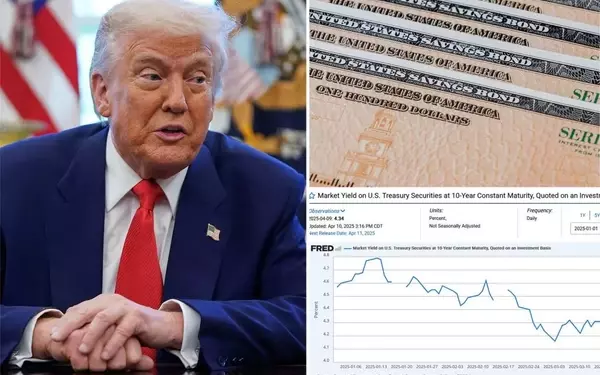
A peculiar alignment in the financial markets has raised eyebrows among economists and investors alike. Traditionally, when stocks falter, bonds step in as a reliable haven for capital preservation. However, recent trends have shown a simultaneous downturn in both asset classes, leaving many questioning the underlying causes. The benchmark 10-year Treasury note experienced a significant spike in yield this week, surpassing 4.5%, indicating reduced investor appetite for these securities.
The interconnectedness of global finance means that shifts in bond yields ripple through various sectors of the economy. Higher yields on long-term government securities translate to increased borrowing costs for both the federal government and consumers. Mortgages, credit card interest rates, and personal loans all become more expensive as a result. Natalie Colley, a financial planner from Francis Financial, emphasized the widespread impact: "This affects nearly every American." With millions relying on market-linked retirement accounts, volatility has left many savers anxious about their financial futures.
Experts point to several potential explanations for the unusual market behavior. Some suggest geopolitical tensions might be influencing investor sentiment, while others attribute it to anticipated inflationary pressures stemming from trade policies. Douglas Boneparth, president of Bone Fide Wealth, noted that tariff actions could lead to inflationary concerns, contributing to the current puzzle. Meanwhile, Neel Kashkari of the Federal Reserve Bank highlighted the declining value of the dollar, suggesting a shift in investor preferences.
Amidst the uncertainty, financial advisors are urging caution and strategic planning. For younger investors, maintaining an appropriate asset allocation and building emergency savings can provide stability. Older investors may explore protective measures such as buffer exchange-traded funds or diversifying into alternative investments like real estate and infrastructure. Lee Baker of Claris Financial Advisors advises against impulsive decisions, emphasizing the importance of professional guidance to navigate turbulent times effectively. By adopting a balanced approach, individuals can safeguard their portfolios and remain resilient in the face of market fluctuations.