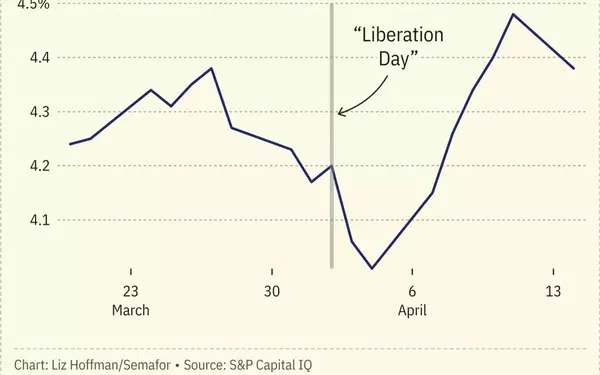
In recent weeks, an unusual sell-off in U.S. Treasurys has raised numerous questions among global investors and analysts. As yields on both 10-year and 30-year bonds reached significant peaks, experts have speculated about the potential culprits behind this unexpected move. China, holding a substantial amount of U.S. debt, has been mentioned as a possible seller, aiming to counteract tariffs imposed by the Trump administration. However, opinions vary widely on whether such a strategy would be beneficial or detrimental to Beijing. Meanwhile, other factors, including Japanese life insurers and hedge funds, have also emerged as potential contributors to the selloff. The situation underscores growing concerns over the stability and reliability of U.S. policy-making, which could further impact investor confidence.
An Unprecedented Shift in Safe-Haven Dynamics
In the midst of mounting recession fears and market volatility, an unprecedented exodus from U.S. Treasurys unfolded recently. During times of economic uncertainty, investors typically flock to the safety of U.S. government bonds. However, over just a few trading sessions, yields surged dramatically, reaching their highest levels since early this year. Notably, China, as one of the largest foreign creditors of the United States, has been scrutinized for potentially weaponizing its Treasury holdings. Some analysts suggest that China may be converting proceeds into European assets like German bunds. Conversely, others argue that such actions could harm China's own financial interests by devaluing its remaining bond portfolio.
Japan, another major holder of U.S. debt, has not escaped scrutiny. Reports indicate that while the Japanese government has pledged not to intentionally liquidate its Treasury holdings, private entities such as life insurers might be driving the sell-off. These insurers, concerned about erratic U.S. policies, may be diversifying their portfolios away from American assets. Additionally, hedge funds and so-called "bond vigilantes" have been identified as possible participants in the selloff. Forced unwinding of complex financial positions due to margin calls added further momentum to the downward spiral.
From a broader perspective, the sell-off reflects waning trust in U.S. policymaking. Analysts highlight how inconsistent and unpredictable decisions, particularly regarding tariffs, have eroded the appeal of Treasurys as a safe haven. This loss of confidence extends beyond financial markets, impacting the U.S. dollar's status as a refuge for global investors.
Implications and Reflections
As an observer of these developments, it becomes evident that the interconnectivity of global financial systems can amplify even minor shifts in sentiment. The sell-off in U.S. Treasurys serves as a stark reminder of the delicate balance between geopolitics, economic policies, and investor behavior. For policymakers, maintaining transparency and coherence is crucial to preserving the trust of international stakeholders. Investors, too, must adapt to an increasingly uncertain landscape by reassessing risk management strategies and diversifying portfolios across multiple asset classes. Ultimately, this episode highlights the importance of fostering stable and predictable environments to sustain long-term economic growth and resilience.