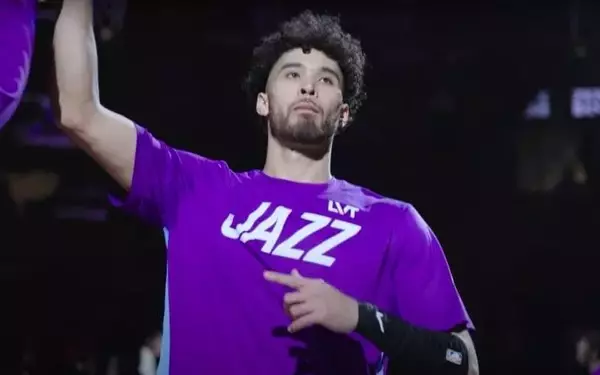
The relationship between the Golden State Warriors and promising forward Jonathan Kuminga is currently strained, marked by questions surrounding head coach Steve Kerr’s full endorsement of the player. This situation has led to complex contract negotiations, with both sides holding differing views on Kuminga's future and the structure of his next deal. As the October 1st deadline for the qualifying offer approaches, the team faces a pivotal decision that could either secure Kuminga's long-term presence or result in his departure.
Disputes Between Jonathan Kuminga, Steve Kerr, and the Golden State Warriors Intensify Over Contract and Future Role
A notable tension has arisen within the Golden State Warriors organization, centered on forward Jonathan Kuminga. According to ESPN's Tim MacMahon, a significant factor in this discord is head coach Steve Kerr's perceived lack of commitment to Kuminga. MacMahon's statements on NBA Today highlighted that \"Steve Kerr doesn't want Jonathan Kuminga. Kuminga doesn't want to play for the Warriors, in part, because he knows the coach doesn't want him.\" These comments underscore a growing rift that impacts the ongoing contract discussions.
Kuminga's representatives recently put forth a proposal for a one-year \"bridge\" deal. This arrangement would offer a higher salary than the standard $7.9 million qualifying offer, while also granting Kuminga unrestricted free agency in 2026. Crucially, this proposed deal would lack a no-trade clause, providing the Warriors with the flexibility to potentially use him as an expiring contract in future trade scenarios.
However, the Warriors' ownership, led by Joe Lacob, and the front office, under Mike Dunleavy Jr., have expressed reservations about this structure. Their primary concern is the risk of losing Kuminga without any compensation if he were to enter the unrestricted free agency market. In response, the team has presented a three-year, $75.2 million offer, which includes a team option for the third year and guarantees $48.3 million over the initial two seasons. An alternative offer of a fully guaranteed three-year, $54 million deal, without a player option, has also reportedly been on the table.
For Kuminga and his agent, Aaron Turner, the core issue lies in maintaining flexibility. They favor a player option, even if it entails a slightly lower annual salary, as it would prevent him from being locked into a team-controlled agreement. This season marked Kuminga's most productive, with averages of 15.3 points and 4.6 rebounds, demonstrating considerable growth in both offensive and defensive capabilities. His athletic prowess and defensive skills made him a vital contributor for the Warriors, particularly during periods when key players like Stephen Curry, Jimmy Butler, and Draymond Green were absent.
Despite Kuminga's improved performance, whispers from within the league suggest that if negotiations continue to stagnate, the Warriors might consider exploring trade options. The Sacramento Kings have reportedly shown interest, while the Brooklyn Nets, who were once potential suitors, have reportedly withdrawn from discussions. With the October 1st deadline for the qualifying offer fast approaching, the Warriors face a critical juncture: they must either concede to Kuminga's desire for greater control over his future or face the possibility of losing him to free agency.
This evolving situation highlights the delicate balance between team control and player autonomy in professional sports. The Warriors' dilemma with Kuminga serves as a compelling case study on how differing priorities can create significant hurdles in contract negotiations. For players, securing flexibility can be paramount for career progression, while teams prioritize asset retention and strategic roster management. The outcome of these negotiations will undoubtedly have lasting implications for both Jonathan Kuminga's career trajectory and the Golden State Warriors' future roster composition, reminding us that even successful seasons don't always guarantee smooth sailing off the court.