Alex Kendall, the co-founder and CEO of Wayve, envisions a future where autonomous driving technology becomes affordable and adaptable. By focusing on creating cost-effective software that works across various hardware platforms, Wayve aims to integrate its technology into advanced driver assistance systems (ADAS), robotaxis, and even robotics. Kendall’s strategy involves an end-to-end data-driven learning system that allows vehicles to interpret sensor data directly into driving actions without relying on high-definition maps or rule-based software. This innovative approach has attracted significant investment, enabling Wayve to develop partnerships with major automotive companies.
Data-Driven Innovation in Autonomous Vehicles
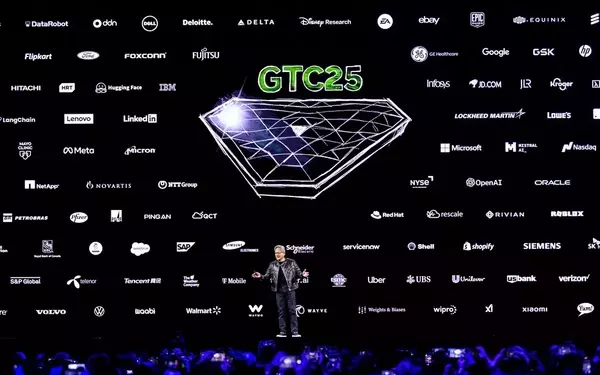
In the realm of autonomous vehicle development, Wayve is making waves with its unique strategy. Founded in 2017, this startup has garnered over $1.3 billion in funding within two years. At the heart of Wayve's vision lies an end-to-end data-driven learning model, which transforms raw sensor inputs into actionable driving decisions. Unlike traditional methods that depend heavily on detailed mapping, Wayve's system thrives on real-time data interpretation. During Nvidia’s GTC conference, Alex Kendall outlined how this methodology not only reduces costs but also enhances adaptability across diverse vehicle types.
The company's commitment to affordability is evident in its ability to operate seamlessly with existing vehicle sensors, eliminating the need for additional hardware investments by original equipment manufacturers (OEMs). Furthermore, Wayve's "silicon-agnostic" nature ensures compatibility with any GPU currently utilized by OEM partners, although their development fleet employs Nvidia's Orin system-on-a-chip.
Wayve plans to initially commercialize its technology at the ADAS level before progressing towards full autonomy. Interestingly, their AI driver functions effectively without lidar, distinguishing them from competitors like Tesla who exclusively use cameras. Despite this difference, both companies share similarities in leveraging widespread ADAS deployment to gather crucial data for achieving complete autonomy.
Kendall highlighted GAIA-2, Wayve's cutting-edge generative world model designed specifically for autonomous driving. Trained using extensive real-world and synthetic datasets, this model empowers Wayve's AI driver with adaptive, human-like behaviors capable of handling complex scenarios never encountered during training sessions.
This forward-thinking approach aligns closely with Waabi, another prominent player in autonomous trucking, as both firms prioritize scalable data-driven AI models tested rigorously via generative AI simulators.
From a journalistic perspective, Wayve's advancements underscore the transformative potential of data-driven technologies in reshaping transportation landscapes globally. Their emphasis on affordability and flexibility sets a new standard for innovation in autonomous driving, inspiring other industry players to rethink conventional approaches. As we witness rapid progress in this field, it becomes increasingly clear that embracing such disruptive innovations could pave the way toward safer, more efficient mobility solutions worldwide.
Wayve's groundbreaking work serves as a powerful reminder of the importance of fostering creativity and adaptability in technological development. By prioritizing cost-effectiveness alongside cutting-edge capabilities, they demonstrate that true innovation lies not merely in advancing technology itself, but in ensuring its accessibility and applicability across varied contexts. For readers and observers alike, this story highlights the potential impact of visionary leadership combined with relentless pursuit of excellence in solving some of today's most pressing challenges within the automotive sector.