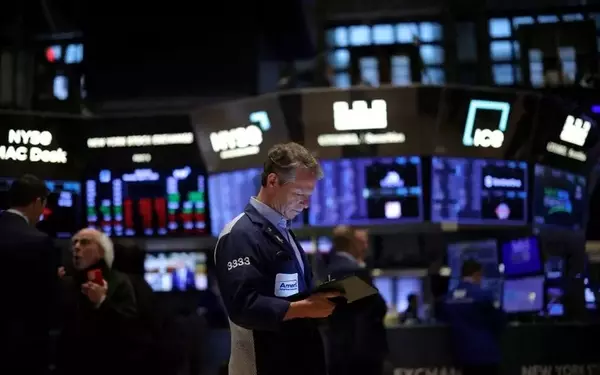
On Friday, Treasury yields reached their peak since February, driven by deteriorating liquidity conditions in the $29 trillion U.S. government bond market. The 10-year Treasury yield climbed to 4.58%, reflecting a broader decline in confidence among investors due to unpredictable trade policies. Although a temporary retreat from reciprocal tariffs was announced, heightened levies on Chinese imports have further unsettled global markets. This situation has led to significant selling pressure on Treasuries and corporate bonds held by foreign entities. Additionally, the dollar weakened, with major currencies such as sterling, the yen, and the franc gaining significantly. Analysts warn that these movements indicate more than just a typical market correction but rather a loss of faith in traditionally stable assets.
Amid growing global unease, traders expressed concerns over the reduced ability to buy and sell Treasuries smoothly. Peter Tchir of Academy Securities noted that foreign holders are under immense pressure to divest both Treasuries and corporate bonds. This stems from uncertainty surrounding the direction of U.S. economic policy, particularly after recent tariff decisions. While the decision to pause reciprocal tariffs for 90 days brought some relief, the simultaneous increase in duties on Chinese goods exacerbated investor anxiety. As a result, many foreign investors are reconsidering their exposure to American financial instruments.
Meanwhile, German Bunds emerged as one of the primary beneficiaries of the sell-off in U.S. assets. According to Guy LeBas of Janney Montgomery Scott, the 10-year German yield dropped to 2.54%. This shift underscores how geopolitical tensions and economic uncertainties can drive capital flows toward perceived safer alternatives outside the United States. Market participants also highlighted the worsening liquidity conditions, which amplified price fluctuations even during smaller trades. JPMorgan analysts reported that market depth had declined sharply this week, making it increasingly difficult to absorb large transactions without triggering significant price changes.
A senior trader at a prominent U.S. bond management firm described the current state of liquidity as subpar, noting that market depth was operating far below normal levels. This lack of fluidity not only affects the U.S. bond market but also reverberates across global financial systems, raising questions about the resilience of traditional safe-haven assets. The combination of political unpredictability, declining liquidity, and shifting investor sentiment has created an environment where trust in established financial mechanisms is being tested.
As the dust settles, the implications of these developments extend beyond immediate market volatility. They signal a broader recalibration of risk perceptions and investment strategies worldwide. For policymakers and market participants alike, addressing liquidity challenges and restoring confidence will be critical in stabilizing global financial markets moving forward.