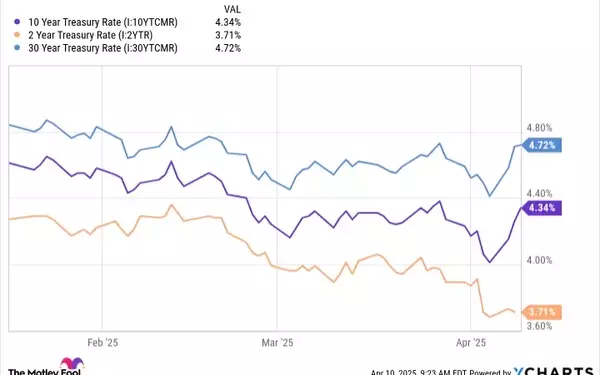
The U.S. bond market has recently undergone a significant sell-off, sparking widespread concern about the state of the economy, investor confidence, and fiscal policy reliability. Yields on 10-year Treasury notes have surged dramatically, reflecting deep-seated anxieties within global financial systems. Traditionally seen as a safe asset, U.S. Treasury bonds are now signaling potential economic trouble ahead due to rising yields and unusual market behavior.
This turmoil is linked to both financial and political factors. The sharp rise in yields indicates increased borrowing costs for the government, while forced selling across asset classes highlights liquidity concerns. Additionally, doubts about U.S. governance and budgetary decisions further exacerbate the situation, complicating planning for businesses and households and raising the risk of an economic downturn.
Unusual Patterns in the Bond Market
In recent weeks, the bond market has displayed unprecedented patterns that deviate from historical norms. Typically, bonds act as a safe haven during stock market declines. However, this time, both asset classes have moved downward simultaneously, creating pricing distortions and uncertainty. Analysts attribute this shift to broader economic concerns, including fiscal policy and administrative dysfunction.
This anomaly stems from several factors. When all asset classes are sold concurrently, it disrupts traditional market dynamics. For instance, institutional investors may resort to "forced selling" to maintain liquidity, even offloading high-quality assets like U.S. Treasuries. This behavior recalls past crises, such as the 2008 financial meltdown and the early days of the pandemic, where liquidity constraints caused market chaos. The current situation suggests that investor skepticism is not just about short-term fluctuations but also reflects deeper worries about long-term economic stability.
Potential Consequences for the Economy
The ongoing volatility in the bond market could have far-reaching implications for the U.S. economy. As yields rise, the cost of borrowing increases, affecting both public and private sectors. This development complicates financial planning for businesses and households, leading to delays in investment and consumption decisions. Such hesitations might eventually trigger a recession, according to some experts, intensifying the need for caution in fiscal and monetary policies.
Moreover, the Federal Reserve's ability to mitigate this crisis is limited, given its primarily political origins. Lowering interest rates alone cannot resolve issues like trade disputes or budgetary impasses. Analysts emphasize that restoring trust in U.S. governance and fiscal responsibility is crucial to stabilizing the bond market and averting a broader economic downturn. Without addressing these fundamental concerns, the risk of prolonged market instability remains significant. Investors and policymakers alike must navigate these challenges carefully to prevent cascading effects across the global economy.