Uncharted Territory: Assessing the Risks in U.S. Treasury Bonds Amid Turbulence
·5 min read
Advertisement
Amid escalating trade tensions and fiscal uncertainties, the dynamics of the U.S. Treasury market have taken an unprecedented turn. As tariffs disrupt global markets and economic forecasts fluctuate, investors are grappling with a new reality where traditional patterns no longer hold sway. This article delves into the complexities reshaping bond yields and explores whether long-term Treasuries still warrant their reputation as safe-haven assets.
Redefining Safety: Is It Time to Rethink Your Bond Strategy?
The Market's Reaction to Tariff-Induced Volatility
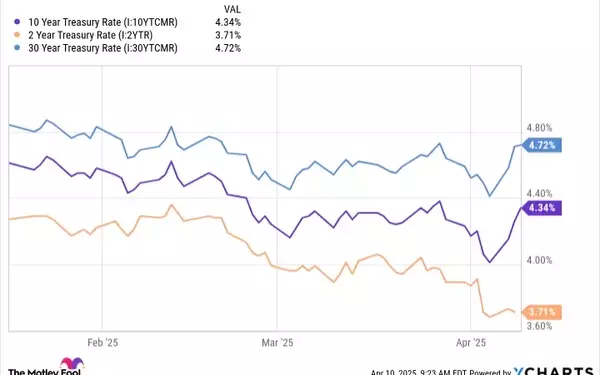
The imposition of substantial tariffs by the U.S. administration has sent ripples through financial markets worldwide. Economists initially anticipated a slowdown in GDP growth due to these measures, prompting traders to speculate on potential Federal Reserve rate cuts. Typically, such scenarios would lead to a surge in demand for Treasury bonds, driving down yields. However, contrary to expectations, long-term yields have experienced a significant uptick, reaching levels not seen in recent years.This anomaly raises critical questions about the reliability of Treasury bonds as a refuge during economic uncertainty. The divergence from historical trends underscores the evolving nature of investor sentiment and the increasing complexity of factors influencing bond performance. Analysts suggest that heightened inflationary pressures and shifting perceptions of U.S. fiscal stability may be contributing to this unusual behavior.
Inflation Expectations and Their Impact on Yields
Inflation remains a pivotal factor affecting Treasury yields. While the Federal Reserve chairman initially described tariff-induced price increases as temporary, the escalation of trade disputes has altered this outlook. Persistent inflation could erode the purchasing power of fixed-income investments, compelling investors to seek higher returns to compensate for diminished real value.Furthermore, the interplay between inflation and interest rates introduces additional layers of uncertainty. Should inflation persist beyond current projections, the Fed might adopt a more cautious stance regarding rate adjustments. This scenario could further amplify yield volatility, challenging conventional wisdom about the inverse relationship between bond prices and yields. Investors must carefully evaluate these dynamics to align their portfolios with prevailing economic conditions.
Fiscal Challenges and Their Implications for Debt Markets
The burgeoning national debt presents another formidable challenge for Treasury bonds. With over $36 trillion in outstanding obligations, the federal government faces mounting pressure to service its liabilities. This fiscal burden not only strains public finances but also affects investor confidence in U.S. debt instruments.Foreign holders of U.S. Treasuries, particularly China, play a crucial role in maintaining liquidity within the market. Any deterioration in diplomatic relations or reduction in foreign purchases could exacerbate supply imbalances, leading to downward pressure on bond prices and upward movement in yields. Prominent figures in the investment community, such as Jeffrey Gundlach, caution against prolonged exposure to long-term Treasuries under these circumstances, advocating instead for shorter-duration securities.
Creditworthiness Concerns and Investor Sentiment
Historically, U.S. Treasuries have epitomized safety and reliability. However, growing fiscal deficits and rising interest expenses necessitate reevaluation of this assumption. Credit rating agencies monitor these developments closely, with Moody's expressing reservations about the sustainability of current fiscal policies.A downgrade in the credit rating of the U.S. government could trigger cascading effects across financial markets, diminishing the appeal of Treasuries as a risk-free asset. Precedents exist, such as the 2011 downgrade by Standard & Poor's, which underscore the vulnerability of even the most established institutions to shifts in investor perception. In light of these risks, prudent investors may consider diversifying their fixed-income allocations to mitigate exposure to potential disruptions.
Strategic Considerations for Fixed-Income Investors
Navigating the complexities of today's Treasury market requires a nuanced approach. Investors should remain vigilant about emerging trends in inflation, fiscal policy, and geopolitical developments that could influence bond yields. Diversification and strategic positioning within the maturity spectrum offer viable strategies for managing risk while preserving capital.Moreover, staying informed about expert analyses and market indicators can enhance decision-making capabilities. By adopting a proactive stance and adapting to changing circumstances, investors can optimize their portfolios for both stability and growth potential. In an era marked by uncertainty, thoughtful planning and flexibility emerge as essential tools for achieving long-term financial success.