Unveiling Allstate's Enhanced Nationwide Catastrophe Reinsurance Program
·5 min read
Advertisement
Allstate, a leading primary insurer in the US, has significantly bolstered its catastrophe reinsurance program. The new program now reaches a towering $9.5 billion in occurrence coverage, marking an impressive increase from last year’s renewal. With catastrophe bonds playing an increasingly vital role and retention levels rising to $1 billion, this move highlights Allstate’s strategic approach to risk management. As we delve deeper into this transformation, it becomes evident how these adjustments reflect broader market trends and the company's forward-thinking strategy.
Empowering Risk Management Through Strategic Adjustments
Expanding Coverage Limits and Retention Levels
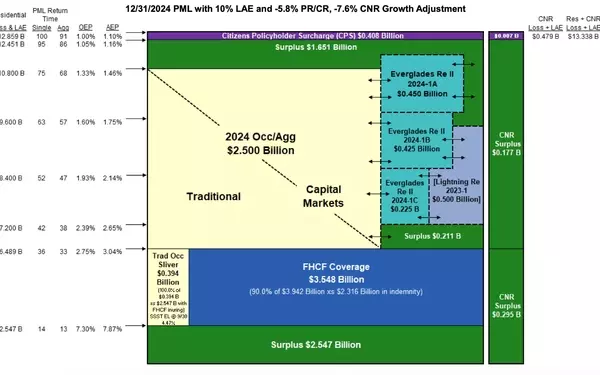
The recent renewal of Allstate’s Nationwide Excess Catastrophe Reinsurance Program showcases a remarkable leap in coverage limits, reaching an unprecedented high of $9.5 billion. This substantial growth signifies not only a commitment to comprehensive risk mitigation but also a response to evolving market demands. Notably, the retention level has been adjusted upward to $1 billion, indicating Allstate’s willingness to shoulder more significant risks internally before engaging external reinsurance partners.In previous years, Allstate had opted for additional coverage that extended lower within the tower structure. However, with the current renewal, the decision to retain higher exposure aligns with a broader industry trend where insurers are reassessing their internal risk appetites. This strategic recalibration underscores Allstate's confidence in its underwriting capabilities and capital strength.Furthermore, the integration of catastrophe bonds as a critical component of the upper layers exemplifies the insurer's innovative approach. These instruments provide robust protection against large-scale events, ensuring financial stability even in the face of extreme scenarios. For instance, the Sanders Re catastrophe bond program contributes meaningfully to the uppermost layers, particularly at $4.25 billion for one issuance, illustrating the reliance on such mechanisms for securing extensive coverage.
Catastrophe Bonds: A Cornerstone of Financial Resilience
Catastrophe bonds have emerged as a cornerstone in Allstate’s reinsurance framework, with over $3.36 billion currently outstanding. This figure positions Allstate as the largest sponsor in the catastrophe bond market, reflecting its pioneering role in leveraging alternative risk transfer solutions. Specifically, the $2.7 billion in Sanders Re catastrophe bonds plays a pivotal role in safeguarding both the Nationwide occurrence and aggregate reinsurance towers.These bonds serve multiple functions, including providing protection for specialized portfolios such as Florida reinsurance, which renews mid-year. Their presence ensures that Allstate can effectively manage diverse geographical and peril-specific exposures without compromising financial health. Moreover, the bonds contribute to aggregate reinsurance protection, with $500 million dedicated to this purpose.Recent developments highlight the dynamic nature of these instruments. Following the recovery of $123 million for the prior annual aggregate risk period, certain tranches of catastrophe bonds have been marked for possible recovery or placed off-risk. For example, a portion of the Class C tranche from the Sanders Re III Ltd. (Series 2022-1) cat bond is earmarked for potential redemption. Similarly, the Class B tranche of notes from the Sanders Re II Ltd. (Series 2021-2) issuance remains extended but inactive for future losses, showcasing the flexibility inherent in these financial tools.
Aggregate Protection and Attachment Points
A notable adjustment in Allstate’s reinsurance program involves the aggregate protection limit, which has slightly contracted compared to previous years. Currently, three tranches offer $500 million in aggregate protection, down from four tranches providing $650 million during the recently concluded annual risk period. Despite this reduction, the attachment point for the annual aggregate cat bond coverage has been raised to $4 billion for the upcoming year, surpassing last year’s threshold of $3.6 billion.This recalibration reflects Allstate’s strategic assessment of probable maximum loss scenarios and its readiness to absorb larger initial losses internally. By maintaining a consistent per-event deductible of $50 million, Allstate balances cost efficiency with adequate protection, ensuring that the program remains both effective and economical.
Kentucky Earthquake Coverage Reinforcement
Beyond the nationwide program, Allstate has also fortified its regional catastrophe protections. Notably, the insurer has renewed its Kentucky earthquake excess-of-loss catastrophe reinsurance, securing $28 million excess of a $2 million retention. This provision offers one year of coverage until May 31st, 2026. Unlike the previous year, where the contract was only 95% placed, this year’s agreement appears fully secured, reinforcing Allstate’s commitment to comprehensive risk management across all geographies.The decision to enhance Kentucky earthquake coverage underscores the importance of addressing localized risks alongside broader national programs. By ensuring full placement of the contract, Allstate mitigates any potential gaps in protection, thereby strengthening its overall risk profile.
Market Dynamics and Future Prospects
Allstate’s latest reinsurance program adjustments occur amidst shifting market dynamics characterized by increased volatility and uncertainty. The insurer’s ability to adapt through strategic enhancements, such as raising coverage limits and optimizing catastrophe bond utilization, demonstrates its resilience and foresight. Pricing for the renewal came in slightly lower on a risk-adjusted basis compared to the prior year, indicating favorable market conditions despite heightened competition.Looking ahead, Allstate’s continued innovation in deploying alternative risk transfer solutions positions it well to navigate emerging challenges. As climate change and other factors drive greater frequency and severity of catastrophic events, the insurer’s proactive stance ensures sustained financial stability and operational excellence. This forward-looking approach not only safeguards Allstate’s interests but also sets a benchmark for industry peers in managing complex risk landscapes.