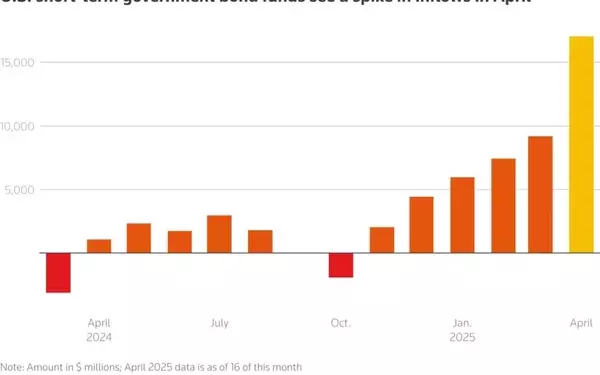
In an unexpected shift, investors are increasingly viewing the euro and German government bonds as safe havens amid rising global economic uncertainty. Traditionally, these assets move in opposite directions due to differing economic signals. However, recent trends indicate a divergence from this pattern, with both experiencing simultaneous surges. This phenomenon suggests a significant "capital flight" toward European assets, driven by concerns over US trade policies and broader geopolitical tensions. Analysts highlight that the usual correlation between currency movements and interest rates has weakened, indicating a fundamental change in investor behavior.
Historically, the euro and German bonds have exhibited an inverse relationship based on economic sentiment. A strong economy boosts the euro while reducing demand for safer German bonds. Yet, this month witnessed a remarkable 5% increase in the euro against the dollar, coinciding with widening yield gaps between US Treasuries and German Bunds. The traditional dynamics appear disrupted, as noted by Mike Riddell of Fidelity International, who attributes this anomaly to heightened market anxiety stemming from US policy decisions.
Investor sentiment appears to be shifting significantly, with many reassessing their reliance on US Treasuries as a primary safe asset. According to Benoit Anne of MFS Investment Management, global asset allocation strategies are evolving, emphasizing diversification away from the United States. Investors are now exploring alternative destinations such as Europe, which is perceived as offering greater stability and rule-of-law governance. April LaRusse of Insight Investment underscores the appeal of well-managed economies outside the US, citing increased volatility in Treasury markets as a key factor influencing this decision.
Despite these shifts, challenges remain for German Bunds to fully replace Treasuries as the world's premier safe asset. The size of the German bond market pales in comparison to the nearly $30 trillion US government bond market. Additionally, the scarcity of available Bunds often results in negative yields, complicating their adoption as a universal safe haven. Nonetheless, Steven Major of HSBC acknowledges growing interest among large global investors in diversifying their portfolios, with Bunds gaining prominence as Germany expands its issuance to support fiscal spending plans.
The evolving landscape reflects a broader recalibration of global financial priorities. While US Treasuries retain their status as the dominant reserve asset, supported by the dollar's central role in international finance and trade, there is undeniable evidence of shifting preferences. Investors are increasingly scrutinizing Europe's offerings, particularly as the European Central Bank adjusts monetary policies to stimulate further investment. This trend signifies a new chapter in global capital flows, where traditional assumptions about safe assets are being redefined.