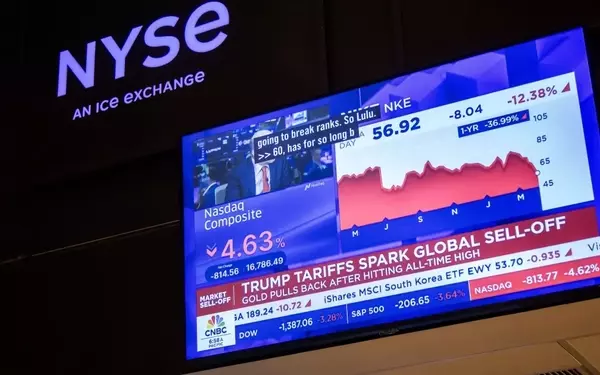
Amidst the uncertainty triggered by US President Donald Trump's recent tariff announcement, global bond yields have plummeted as investors seek refuge in safer assets. The shift reflects a growing demand for government bonds, with analysts pointing out that this movement is unwinding financial tightening across regions. Despite potential policy reversals, concerns persist regarding the sustainability of the bond rally due to inflation risks and central bank interventions.
The sharp decline in yields signals an increasing fear of a possible economic slowdown or recession, particularly in the US and other major economies. Investors are flocking to bonds as a secure haven amid stock market volatility, yet experts warn about the transient nature of this trend if stability returns.
Bond Rally Amid Global Uncertainty
Investor sentiment has shifted dramatically following the tariff announcement, leading to a significant drop in bond yields worldwide. Germany’s 10-year bund, serving as the eurozone benchmark, experienced a notable decrease from over 2.9% last month to just 2.59% within days. This rapid change highlights the heightened demand for safe-haven assets during turbulent times. Analysts suggest that while reversing the tariff stance might ease immediate panic, it won't eliminate broader uncertainties tied to unpredictable policies.
In-depth analysis reveals that the rally in German bunds represents more than just a temporary reaction to tariffs; it signifies a broader unwinding of tightened financial conditions across Europe. Market observers note that even without further tariff escalations, lingering doubts about future policy directions could sustain investor interest in government securities. Moreover, the situation underscores how geopolitical tensions and fiscal measures can rapidly alter global capital flows, making bonds an attractive option despite their relatively low returns. As such, these developments highlight the intricate interplay between geopolitics, economics, and investment strategies in today’s interconnected world.
Potential Risks and Future Outlook
While the current bond rally offers some comfort to anxious investors, there are underlying concerns about its longevity. Experts like George Lagarias emphasize that should the market stabilize, demand for bonds may wane, influenced heavily by ongoing inflationary pressures. Furthermore, any actions taken by central banks could significantly impact bond dynamics, adding another layer of complexity for investors to consider. Thus, maintaining vigilance remains crucial amidst fluctuating economic landscapes.
Looking ahead, the possibility of a global growth slowdown looms large, fueled partly by the uncertainty surrounding US trade policies. For instance, the US 2-year Treasury yield hitting its lowest point since 2022 raises alarms about impending recessions. Similarly, Japan’s 10-year bond yield reaching multi-month lows indicates widespread apprehension among global investors. These trends underscore the importance of diversifying portfolios and staying informed about macroeconomic indicators. Additionally, understanding the role of central banks in shaping monetary policies becomes vital in navigating through uncertain periods. Ultimately, while bonds provide a semblance of security now, the ever-changing global economic environment necessitates prudent planning and strategic decision-making from all stakeholders involved.