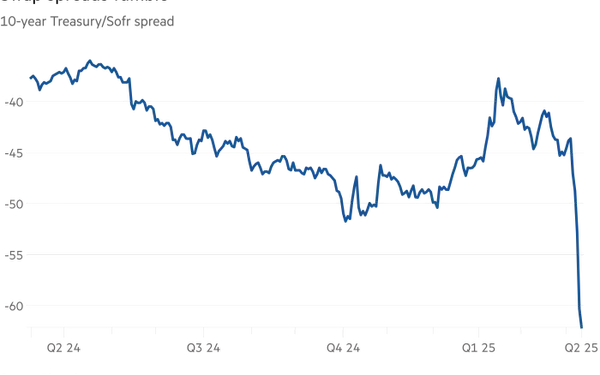
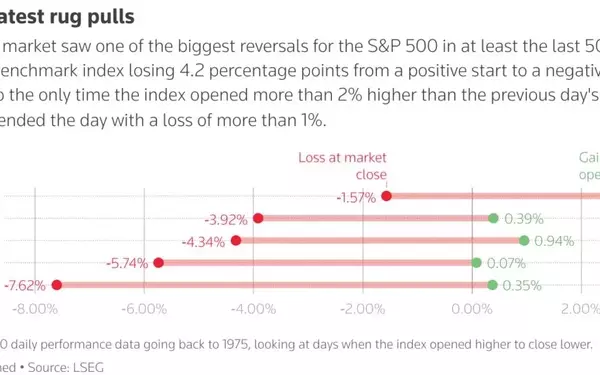
In a volatile period marked by tariff-induced market disruptions, investors are increasingly turning to short-dated European bonds as an alternative safe haven. The U.S. Treasury yields have surged, prompting comparisons with the U.K.'s 2022 fiscal crisis. Analysts suggest that this shift reflects growing uncertainty about the reliability of the U.S. dollar and its traditional status as a secure investment. Meanwhile, German bonds have gained prominence as a stable option amidst global economic uncertainty.
Market Dynamics: A Closer Look
Amidst the turbulence of financial markets, in the golden hues of autumn, investors worldwide have begun reassessing their portfolios. As U.S. Treasuries experienced a significant sell-off, driven by heightened geopolitical tensions and inflation concerns, attention turned toward shorter-term European government bonds. Notably, Germany's bunds emerged as a preferred choice for cautious investors seeking stability. In contrast, longer-dated European bonds mirrored the upward trend seen in the U.S., reflecting broader apprehension over global economic health.
By midday in London, shortly following China’s latest announcement, shifts were evident across various European bond yields. French, Italian, and British long-term yields all increased, while shorter-term counterparts saw declines. Particularly striking was the surge in Britain's 30-year gilt yield, which reached its highest level in nearly three decades. Diana Iovanel from Capital Economics noted that these fluctuations were partly due to margin calls affecting hedge funds but also underscored the precarious state of the U.K.'s fiscal landscape.
Ken Egan of KBRA highlighted another critical factor driving this realignment: speculation surrounding reduced trust in the U.S. dollar. He suggested that major reserve managers might reconsider their holdings of U.S. Treasuries in response to shifting American policies. This sentiment coincides with broader unease regarding the efficacy of traditional safe havens during periods of volatility.
From a journalistic perspective, this development serves as a stark reminder of how interconnected global economies truly are. It prompts reflection on the necessity for diversification within investment strategies and underscores the importance of understanding regional nuances when navigating turbulent financial waters. For readers, it offers valuable insight into adapting one's financial approach amidst evolving macroeconomic conditions and geopolitical landscapes.