Secure Your Financial Future with Reliable Investment Strategies
Amidst shifting market dynamics, core bonds stand out as an indispensable asset class for savvy investors seeking balance and resilience. Here's how they can fortify your investment strategy and enhance long-term returns.
The Role of Core Bonds in Diversification
Core bonds play a pivotal role in constructing resilient portfolios, particularly during periods of economic uncertainty. These securities, which include government-issued Treasurys, corporate bonds, and agency-backed instruments, offer consistent yields and mitigate risk exposure. Historically, high-quality bonds exhibit an inverse relationship with equities, providing a hedge when stock markets falter. For instance, during the brief recession triggered by the pandemic in 2020 and the prolonged downturn from late 2007 to mid-2009, top-rated core bond funds consistently outperformed the S&P 500 index. This performance underscores their value as a stabilizing force within investment portfolios.
Moreover, while stocks and bonds do not always move in opposite directions, historical data reveals that this correlation holds true approximately 95% of the time over the past century. Investors should remain committed to holding core bonds despite occasional deviations, recognizing their enduring ability to protect capital during turbulent times. Active management further enhances diversification benefits, allowing fund managers to adjust positions based on evolving market conditions.
Optimal Allocation Strategies for Core Bonds
When designing a balanced portfolio, experts recommend allocating a significant portion of fixed-income investments to core bonds. In a traditional 60/40 equity-to-fixed-income split, around 30% of the latter should consist of core bonds, according to Paul Olmsted, a senior manager research analyst at Morningstar. This allocation ensures adequate coverage against potential downturns without sacrificing overall portfolio growth. Rick Wedell, Chief Investment Officer at RFG Advisory, emphasizes that core bonds serve as a critical safeguard during periods of heightened anxiety about recessions or economic instability.
To optimize performance, many advisors prefer actively managed core bond funds due to their flexibility in navigating diverse market environments. These funds typically constitute between 60% and 80% of clients' fixed-income portfolios, complemented by shorter- and longer-duration Treasury or corporate bonds. By employing a barbell approach, investors gain the agility to tweak durations swiftly—adjusting by half a year through minor reallocations of just 5% on either side of the portfolio. Such strategic positioning maximizes both yield opportunities and risk management capabilities.
Capitalizing on Current Market Conditions
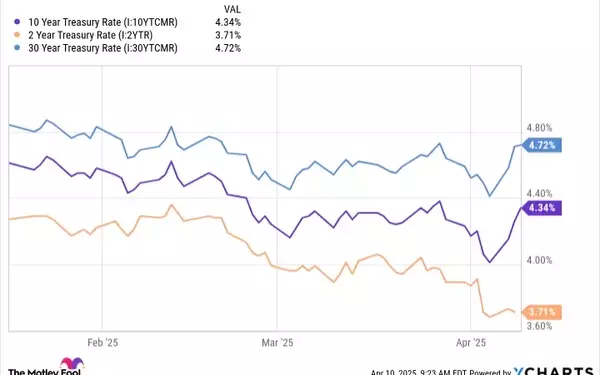
Despite recent fluctuations in the bond market, seasoned professionals advise maintaining confidence in core bonds. Certified Financial Planner Barry Glassman highlights the appeal of attractive yields currently available, noting that rising rates enhance annual income cushions provided by this asset class. Comparatively, four years ago, meager yields left little room for offsetting principal losses caused by rate increases. Today's environment presents a more favorable scenario, where increased yields bolster portfolios even amidst price adjustments.
Glassman adopts either a laddered approach involving core bonds of varying maturities or utilizes actively managed funds to achieve optimal results for his clients. Both methods capitalize on prevailing market trends while preserving essential diversification elements. Investors must focus on long-term objectives rather than short-term volatility, leveraging the strengths inherent in core bonds to build robust portfolios capable of weathering any storm.
Premium Fund Options for Enhanced Returns
Among the standout choices recommended by analysts, the Baird Aggregate Bond Fund emerges as a leading contender. Praised for its strategic emphasis on yield curve positioning, sector allocation, and security selection, this silver-rated fund offers a compelling 30-day SEC yield of 4.01% alongside a competitive expense ratio of 0.55%. Its institutional shares receive an elevated gold rating, reflecting superior performance attributes.
Another distinguished option is the Fidelity Investment Grade Bond Fund, which garners a prestigious gold rating. Boasting a 30-day SEC yield of 4.46% and net expense ratio of 0.44%, this fund employs a meticulous research-driven methodology supported by advanced proprietary tools. Similarly, the John Hancock Investment Grade Bond Fund delivers solid returns with a bronze rating, though it carries a slightly higher expense ratio of 0.75%. Its institutional shares secure a silver rating, acknowledging effective value-oriented strategies implemented by experienced portfolio managers.
Investors seeking specialized expertise might consider the JPMorgan Core Bond Fund, praised for its focus on securitized debt. Rated silver, this fund provides a 30-day SEC yield of 3.81% and expense ratio of 0.75%. Analysts commend its outstanding track record in delivering consistent outcomes across varied market cycles. Lastly, the TCW Core Fixed Income Fund rounds out the list with a bronze rating, offering a 3.37% 30-day SEC yield and expense ratio of 0.63%. Rooted in fundamental principles and valuation sensitivity, this fund exemplifies adaptability in challenging scenarios, ensuring sustained success for its stakeholders.